Mutiny in the Fleet
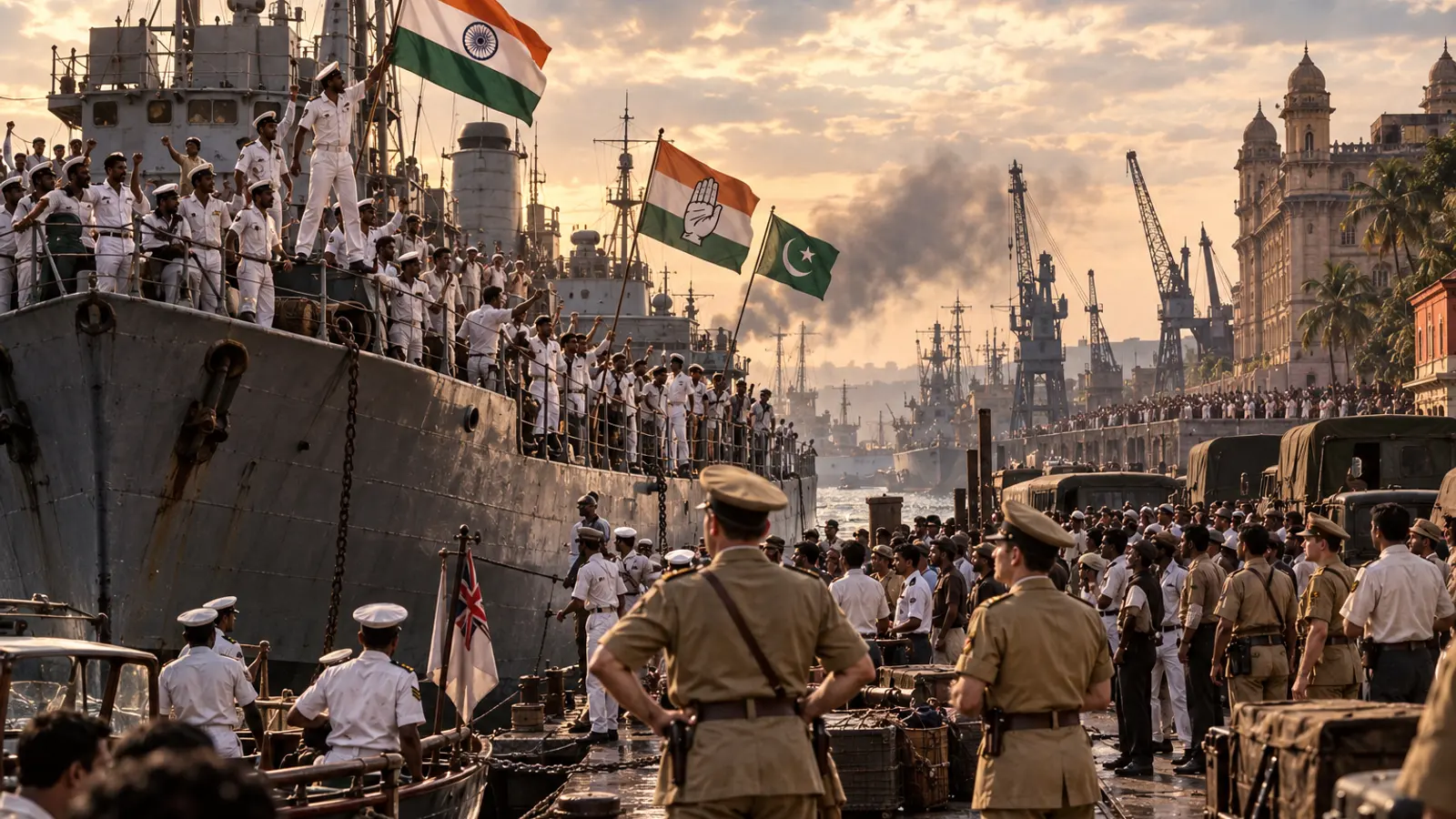
It began over food. On 18 February 1946 the ratings of HMIS Talwar, the navy's signals school in Bombay, refused their rotten meals and the racial abuse that came with them — and the strike ran through the harbour like a powder trail. Within forty-eight hours some seventy-eight ships and twenty thousand sailors were out, an elected Naval Central Strike Committee under M. S. Khan was in charge, guns had been trained on the Gateway of India, and from the mastheads flew something no one had seen before: the Congress tricolour, the League's crescent, and the red flag, hoisted together.
Bombay's mill workers came out in a general strike in the sailors' support, and for two days the city fought pitched battles with British troops that left more than two hundred dead. In Karachi, HMIS Hindustan exchanged fire with shore batteries. The national leadership, within sight of a negotiated freedom, wanted no revolution: Patel and Jinnah jointly pressed the ratings to give in — of the front-rank leaders only Aruna Asaf Ali, the heroine of 1942, stood openly with them.
On 23 February the Committee yielded, signalling that they surrendered to India, not to Britain. There were no mass reprisals, because none were possible: the mutiny, coming on the heels of the Red Fort trials, had told London in the plainest language that the Indian armed forces — the instrument of two centuries of rule — could no longer be counted on. Within weeks Attlee's Cabinet Mission was on its way to negotiate Britain's departure from a bankrupt, exhausted empire.