Direct Action Day
The Cabinet Mission's intricate plan for a united, federated India died in the summer of 1946, each side convinced the other had cheated on its meaning. Jinnah, declaring that the League had done with constitutional methods, called on Muslim India to observe 16 August as 'Direct Action Day' in support of Pakistan. In Bengal — the one great province the League governed — Chief Minister Suhrawardy declared a public holiday, and the processions that morning marched armed.
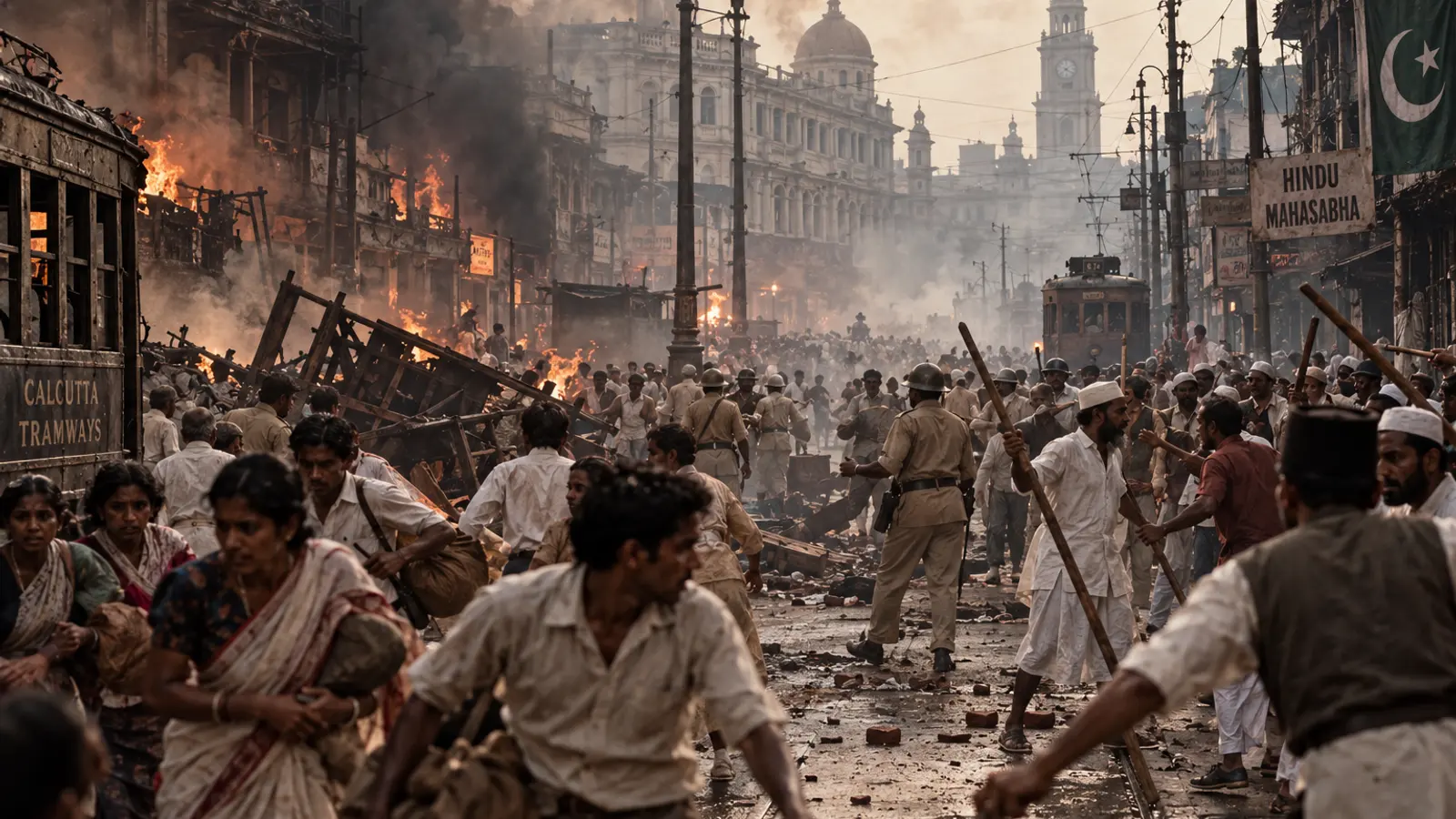
What followed is remembered as the Great Calcutta Killing. For three days the city devoured itself: Muslim crowds and Hindu crowds, then organised gangs of both, killed with knives, iron bars, and fire while the police stood by or vanished. Perhaps four thousand died and a hundred thousand were burned or driven from their homes; corpses choked the Hooghly and lay stacked in the lanes for the vultures. Neither community could claim victory — only that the city's mixed neighbourhoods had been unmixed forever.
The contagion travelled: to Noakhali in October, where Gandhi, near eighty, walked barefoot from village to village for four months trying to stop the killing with his presence alone; to Bihar in reprisal; to Punjab in the spring. Leaders who had fought Partition all their lives began, in private, to accept it as the price of stopping the slaughter. After Direct Action Day the question was no longer whether India would be divided, but how soon — and how bloodily.