Freedom at Midnight
In June 1947 the last Viceroy, Mountbatten, announced that Britain would go not in 1948 as promised but within ten weeks — and that India would be divided. Cyril Radcliffe, a barrister who had never set foot in India, was given five weeks to draw a line through Punjab and Bengal, through fields, canal systems, and villages, deciding the fate of eighty-eight million people. The award was kept sealed until independence had safely arrived.
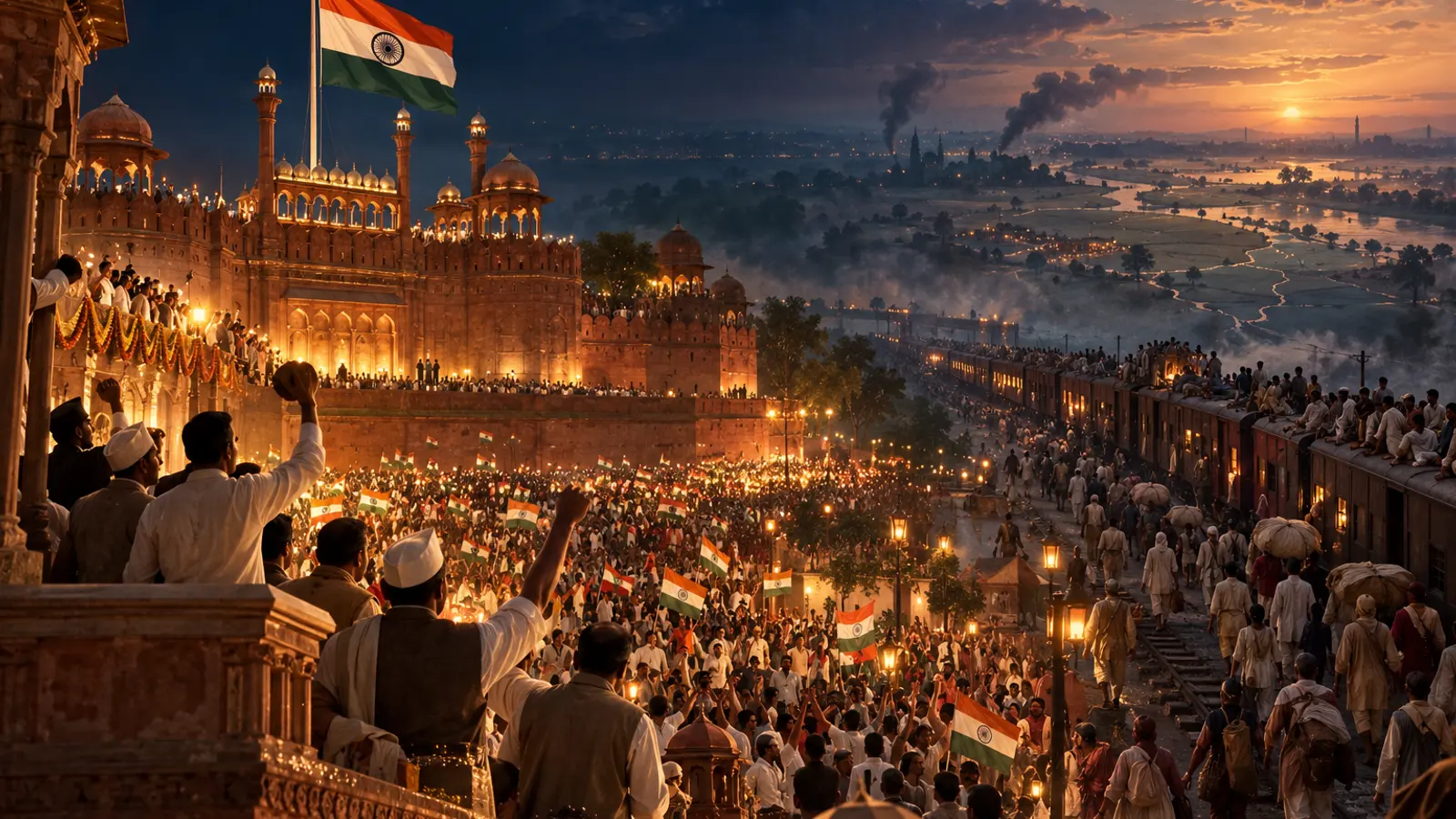
As the midnight of 14–15 August came, Nehru rose in the Constituent Assembly: 'Long years ago we made a tryst with destiny,' he told the new nation, and at the stroke of the hour the Raj was gone. In Karachi, Jinnah's Pakistan was a day old. Crowds wept and sang outside; the tricolour rose where the Union Jack had flown for ninety years.
The joy and the horror arrived together. Partition set perhaps fifteen million people moving across the new border in both directions and killed hundreds of thousands, by many counts a million, in massacres that emptied whole districts. Gandhi kept no celebration; he was in Calcutta, fasting against the killing, and within six months he would be dead by an assassin's bullet. The empire ended; the tryst — the pledge to wipe every tear from every eye — had, as Nehru said that night, still to be redeemed.