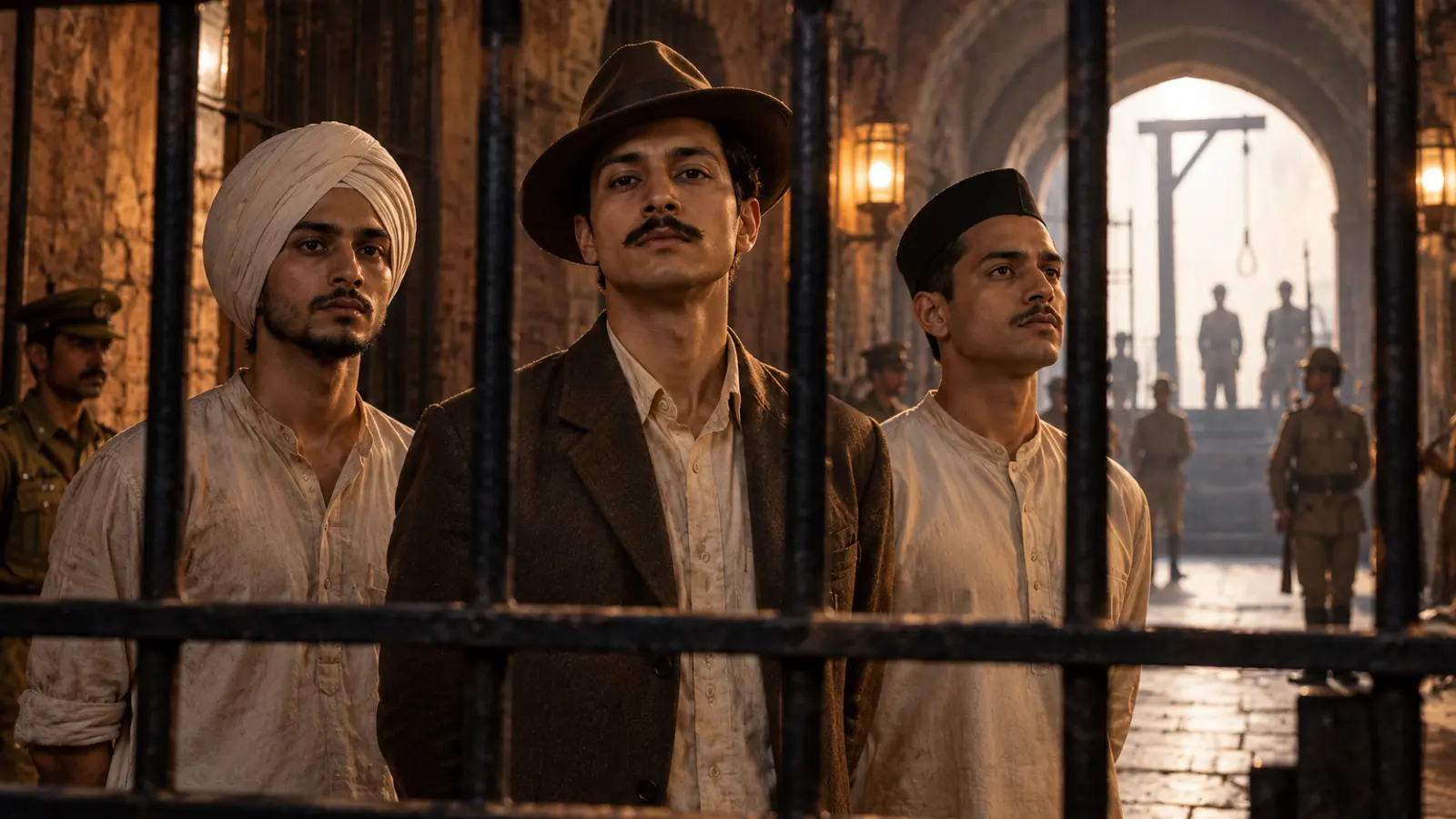
The Gallows of Lahore
Not all the young would wait for the charkha to spin freedom. Bhagat Singh, a voracious reader of revolution from a family of Punjab patriots, sought a swifter reckoning. To avenge Lajpat Rai's death he and Rajguru shot a police officer in Lahore; then, meaning 'to make the deaf hear', he and Batukeshwar Dutt threw two smoke-heavy bombs into the empty benches of the Delhi Assembly and stood waiting to be arrested, showering leaflets.
The trial became his platform. From the dock and from prison — where he led a 116-day hunger strike for political prisoners' rights, during which his comrade Jatin Das fasted to death — Bhagat Singh's words travelled further than any bomb. His popularity, the government privately admitted, rivalled Gandhi's own.
On the evening of 23 March 1931, hours ahead of schedule and behind closed gates, Bhagat Singh, Rajguru, and Sukhdev were hanged, their bodies cremated in secret on the Sutlej's bank. He was twenty-three. Gandhi, days from signing his pact with the Viceroy Irwin, was bitterly blamed for not saving them. The gallows did their work badly: the Raj had made three martyrs who would outlive it.