The Chittagong Rising
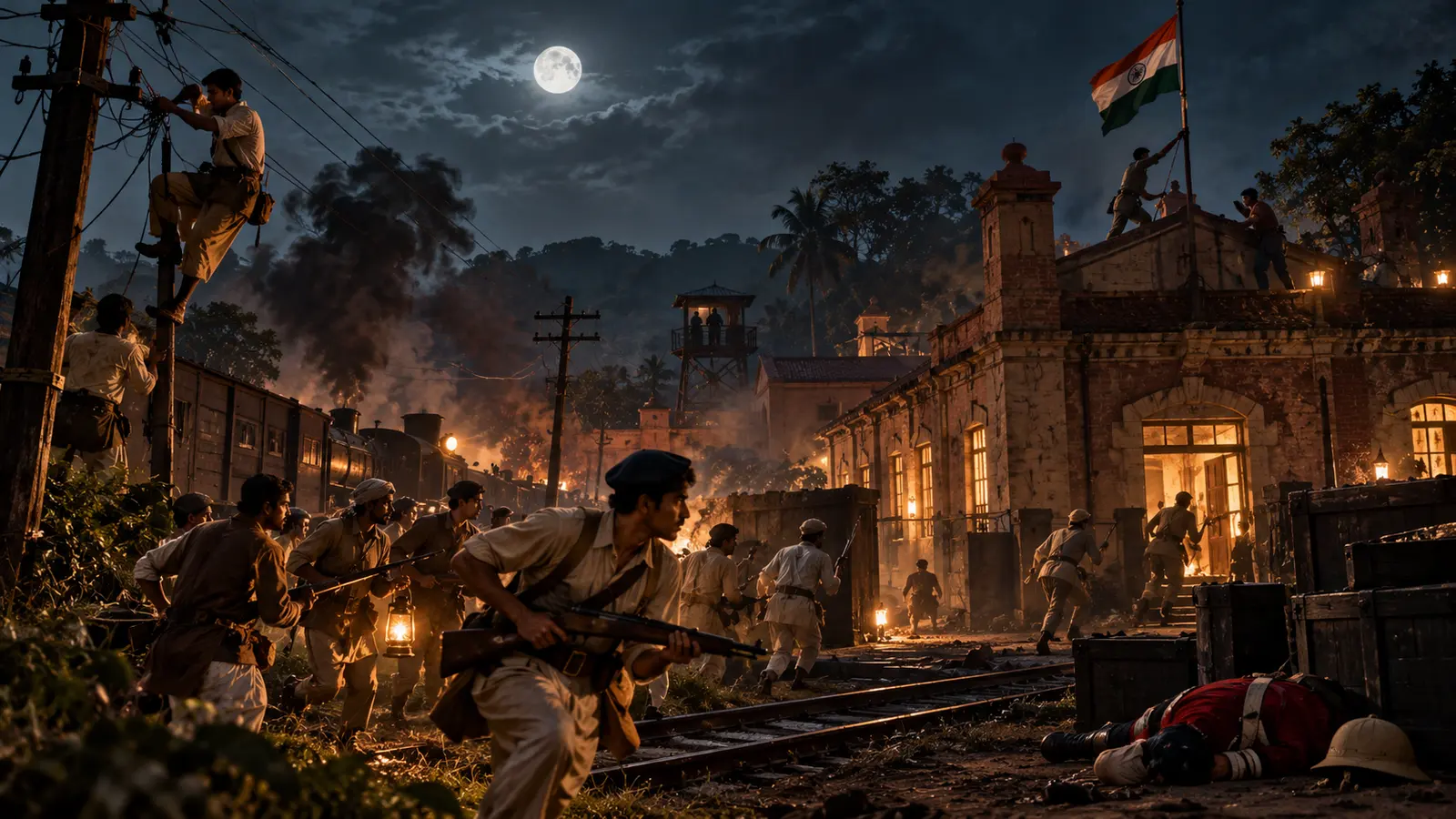
Twelve days after Gandhi lifted salt at Dandi, a schoolteacher lifted rifles at Chittagong. Surya Sen — 'Masterda' to the students who followed him — had planned his rising on the model of Dublin's Easter 1916: on the night of 18 April 1930 his Indian Republican Army, some sixty-five strong and many of them teenagers, seized the police and auxiliary armouries, burned the telegraph office, cut the rail lines, and proclaimed a provisional revolutionary government from the armoury steps. One cruelty of luck decided the campaign: the armouries yielded weapons, but the ammunition was stored elsewhere.
Four days later, cornered on Jalalabad Hill, eighty boys with muskets fought a pitched battle against regular infantry and lost a dozen dead, some of them fourteen and fifteen years old — then broke through and scattered into the villages, which fed and hid them for years while the group fought on in cells. In 1932 Pritilata Waddedar, a young philosophy graduate, led the attack on the Pahartali European railway club that advertised itself closed to 'dogs and Indians', and swallowed cyanide rather than be taken; Kalpana Datta was captured in arms; the women of Bengal had entered the war.
Sen was betrayed in 1933, brutalised in his last days, and hanged in January 1934, his body given to the sea so no grave could gather crowds. The Raj won every engagement and lost the audience: recruitment to revolutionary groups surged across India, and Chittagong entered ballad and film as the town that had, for one night, been free. Set this plate beside the Salt March, its exact contemporary — salt and rifles, the two answers of 1930, walking out of the same national fury.