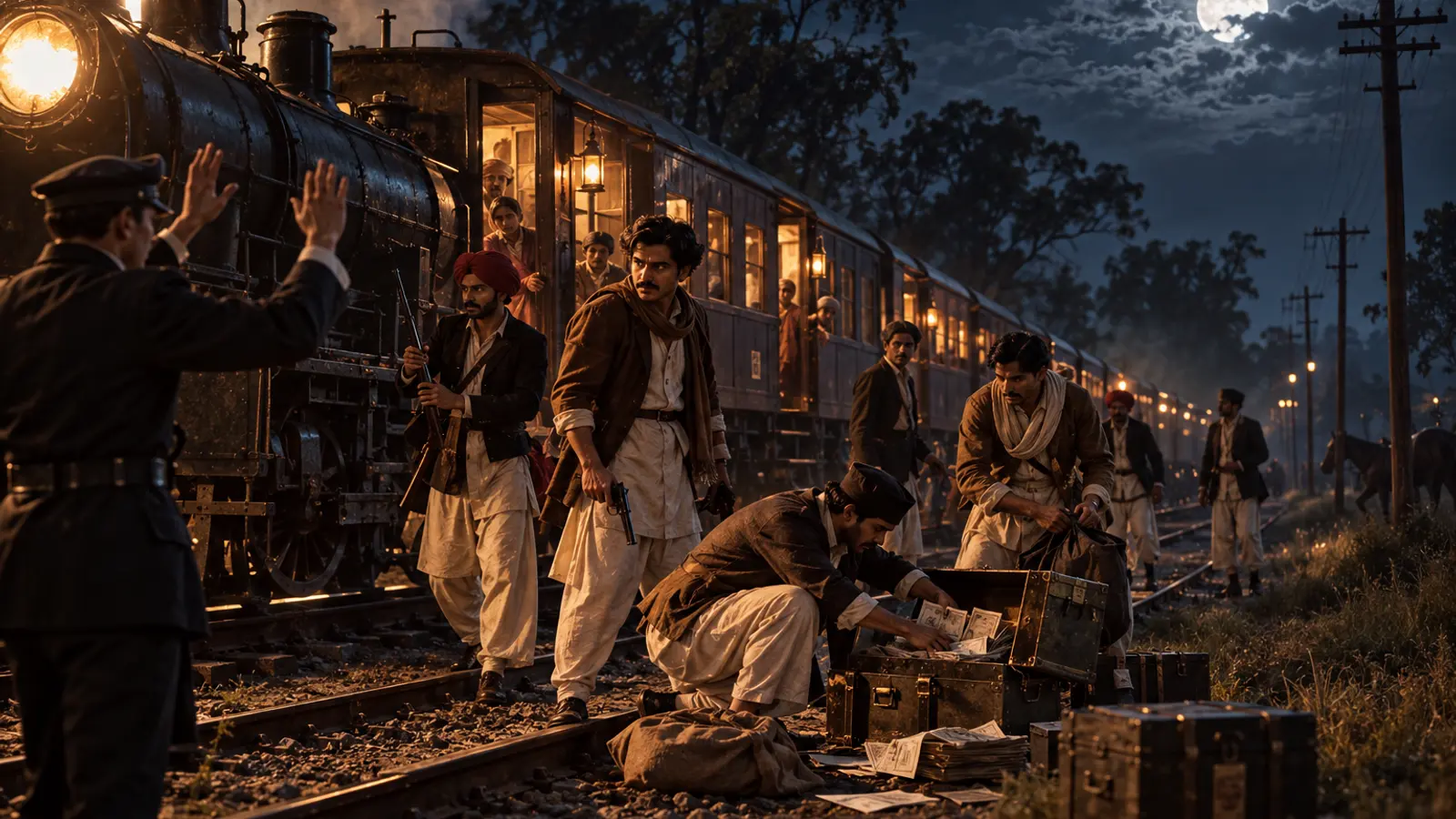
The Kakori Conspiracy
When Gandhi called off Non-Cooperation after Chauri Chaura, a generation of young men who had burned their school books for him concluded that nonviolence had been tried and found wanting. In 1924 they founded the Hindustan Republican Association — its leading spirit Ram Prasad Bismil of Shahjahanpur, poet and organiser — with a constitution promising a federated republic won by armed revolution. Revolutions need money; the HRA resolved to take the government's, never an Indian's.
On 9 August 1925, ten men pulled the chain of the 8-Down passenger train near Kakori station, overpowered the guard, and broke open the cash chest of railway money bound for the treasury. The haul was small; the answer was not. Some forty arrests, an eighteen-month trial, and four death sentences: in December 1927 Bismil, Rajendra Lahiri, Roshan Singh, and Ashfaqulla Khan went to the gallows in four different jails. Bismil and Ashfaqulla — Hindu and Muslim, poets both, the closest of friends — died with verses on their lips, Bismil with the ghazal 'Sarfaroshi ki Tamanna' that became the anthem of everyone who came after.
Chandra Shekhar Azad, the one leader never taken, rebuilt the shattered organisation and gave it a new name and a new word — the Hindustan Socialist Republican Association — with a Lahore student named Bhagat Singh at his side; Azad himself would die as he had sworn to, fighting, never captured, in an Allahabad park in 1931. Kakori is the hinge of the armed struggle: behind it, Bengal's bombs and Ghadar's gallows; ahead of it, the Assembly bomb, the Lahore trial, and three more names for the songs.