Alluri's Rampa Rebellion
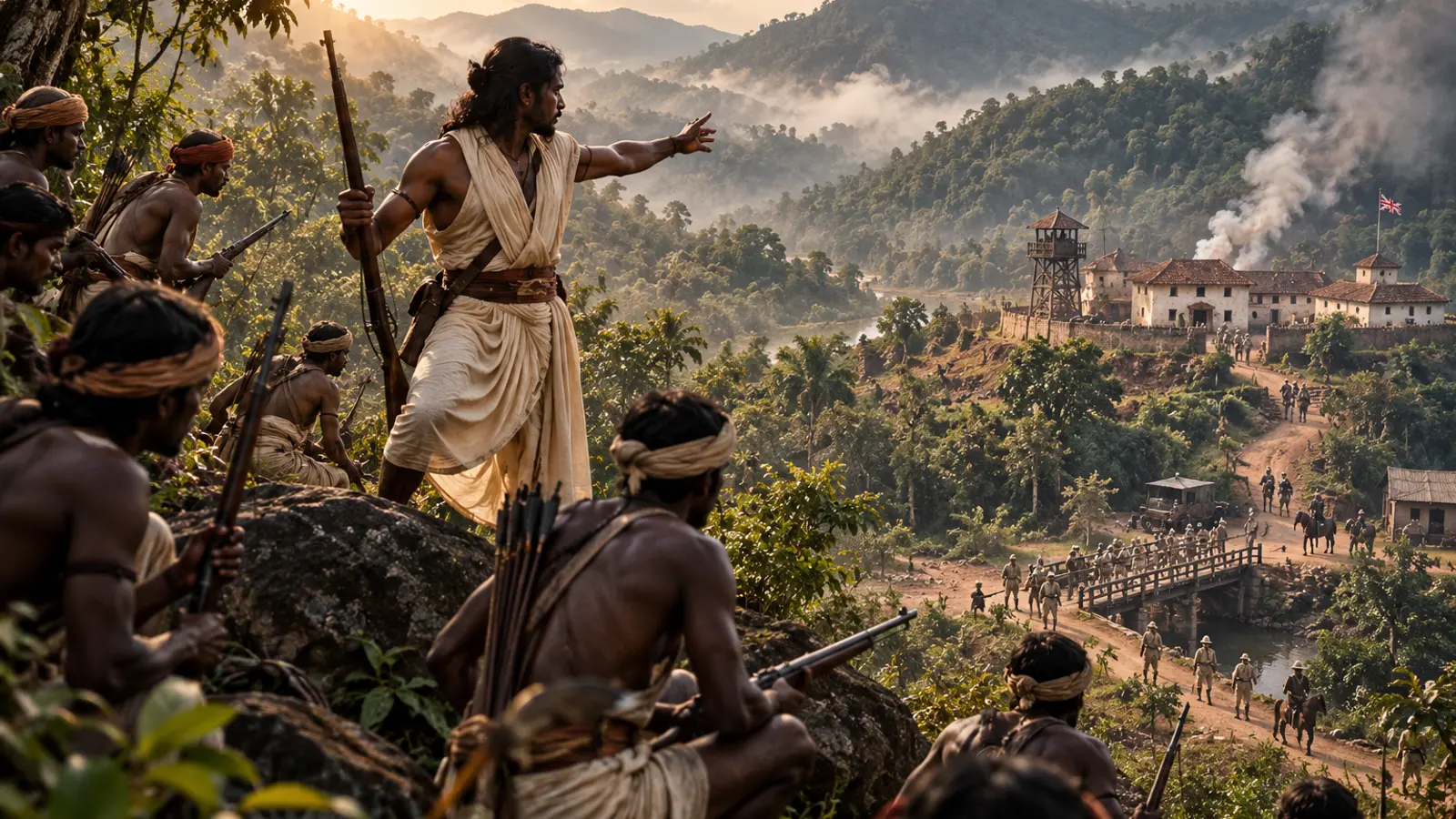
In the forested hills above the Godavari, the Raj's forest laws had made a crime of the hill peoples' whole way of life: podu cultivation banned, forest produce reserved, and the men themselves pressed into unpaid road-gang labour under contractors' whips. Their grievances found a leader in Alluri Sitarama Raju — a young ascetic from the plains credited with strange powers, who had watched Non-Cooperation reach the hills and concluded that this country's answer would have to be harder than spinning.
On 22 August 1922 he led the first raid, on the Chintapalli police station — taking rifles and ammunition, and leaving a signed notice announcing where he would strike next. He kept the promise at Krishnadevipeta and Rajavommangi in the same week. For two years the fituri ran: ambushes in the ghat roads that annihilated police parties, captured Lee-Enfields against the Malabar Special Police and Assam Rifles, villages punished collectively for feeding him, and the legend of the Manyam Veerudu — the hero of the jungles — growing with every raid the Raj could not prevent.
It ended as these wars end: in May 1924 Raju was taken at Koyyuru, tied to a tree at Krishnadevipeta, and shot without trial. He was about twenty-six. The rebellion cost the Raj more to suppress than any agency rising before it, and forced the grievances it had ignored onto the record. In the Telugu country his name never left the songs; the hills had given the struggle its own Bhagat Singh two years before Kakori, and a reminder that the freedom movement was never only a thing of the towns.