Non-Cooperation
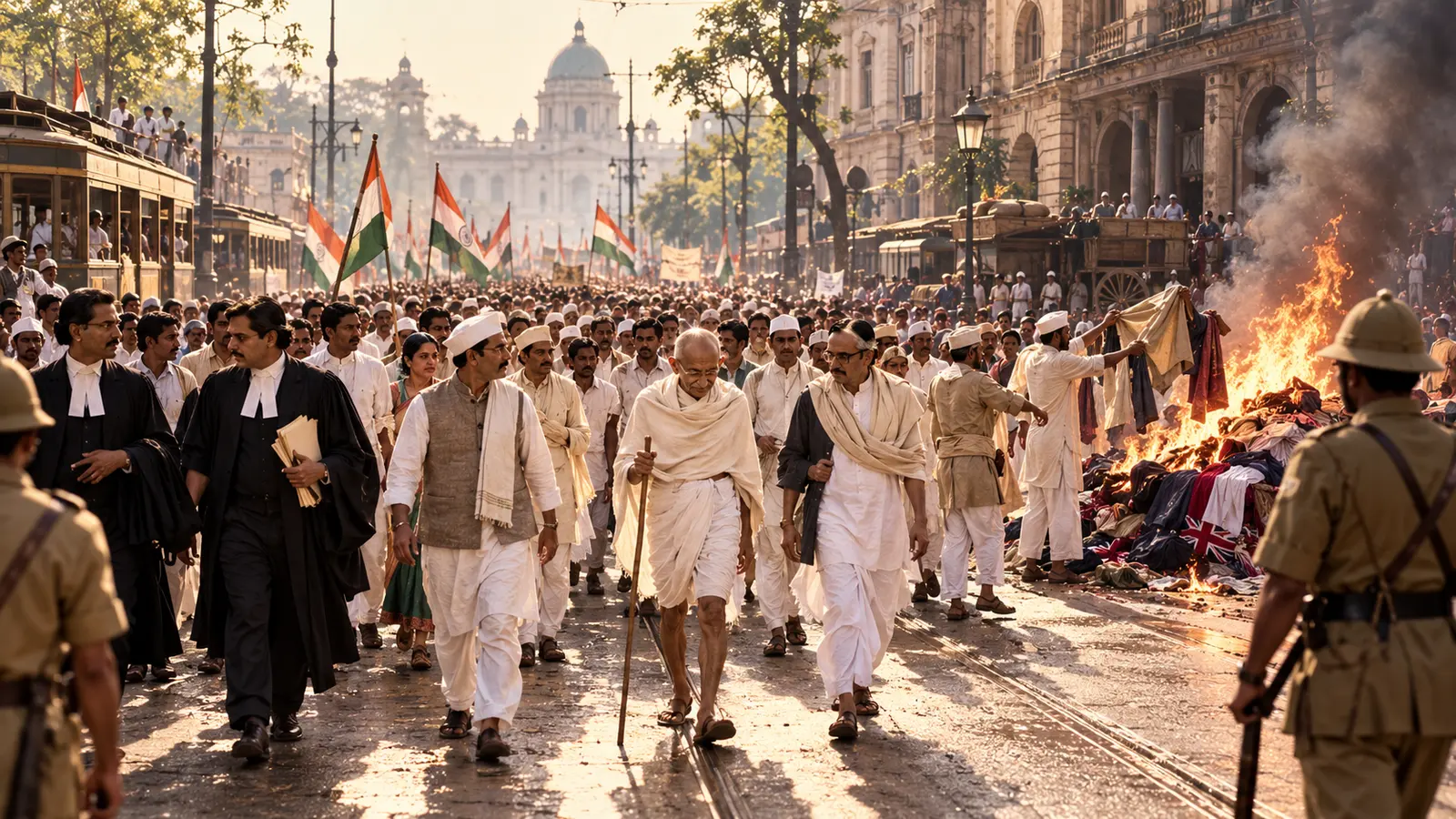
At Calcutta in September 1920, Gandhi asked the Congress to do something no colonial people had tried: withdraw, en masse, the cooperation on which the Raj silently depended. Lawyers were to leave the courts, students the government schools, voters the sham councils; titles were to be returned, foreign cloth burned, and homespun khadi worn as the uniform of freedom. Joined to the Khilafat cause, it united Hindu and Muslim India as never before.
The country caught fire in slow motion. Motilal Nehru and C. R. Das abandoned princely legal practices. The charkha — the spinning wheel — appeared in courtyards from Punjab to Madras, and the sale of foreign cloth halved. Tens of thousands filled the jails deliberately, discovering that prison had lost its terror. Gandhi promised swaraj within a year, and for a season it seemed possible.
Then, in February 1922, a procession at Chauri Chaura was fired on by police, and the crowd burned twenty-two constables alive in their station. Gandhi, to the fury of colleagues, called off the whole movement: a freedom won by mob violence, he said, would not be freedom. He got six years in prison for sedition and told the judge the sentence was an honour.