Bardoli
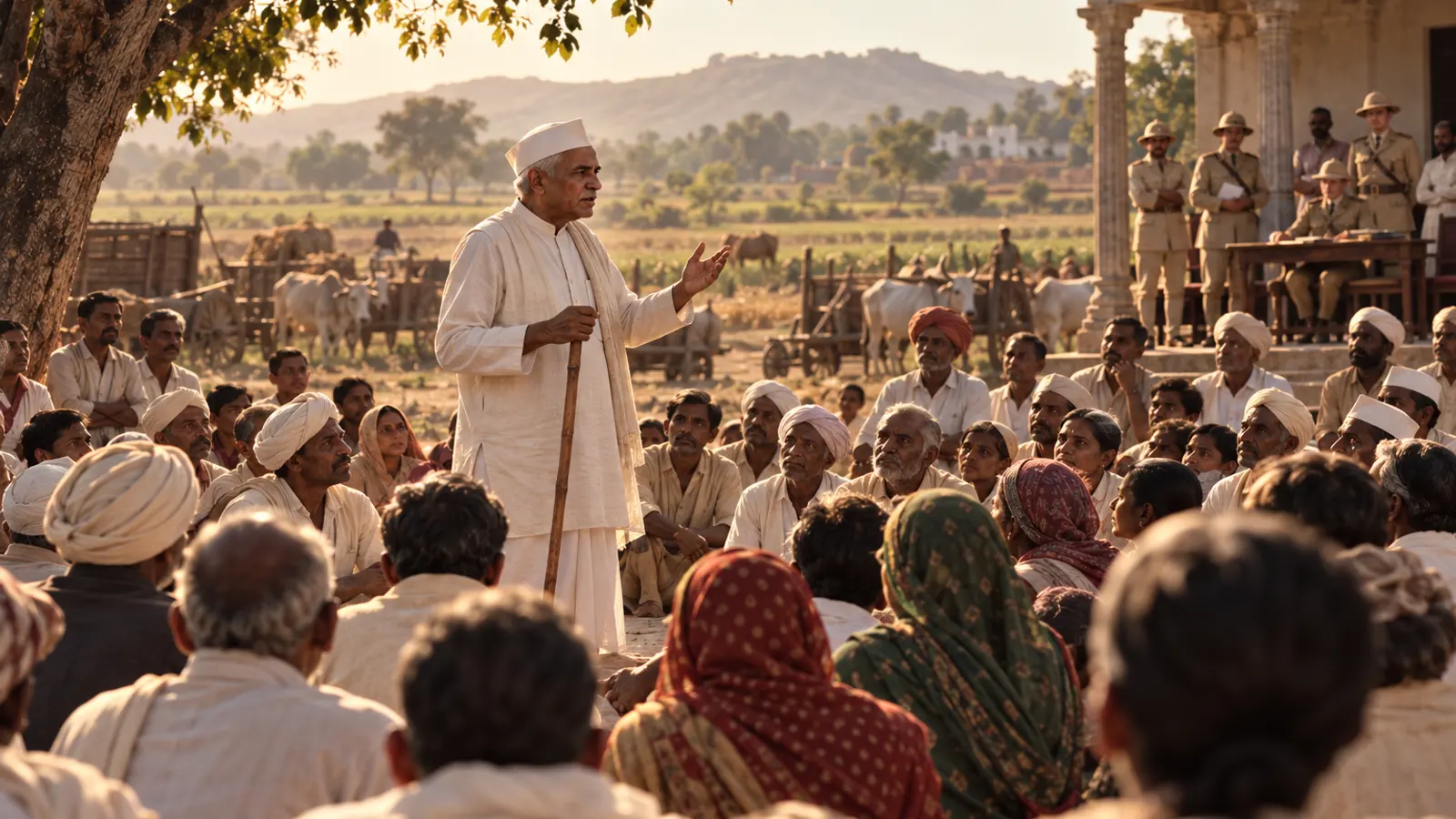
In 1927 the Bombay government raised Bardoli taluka's land revenue by more than a fifth on the strength of a slapdash settlement report, and the eighty-seven villages of the taluka appealed, were ignored, and turned to the barrister who had already led Gujarat's flood relief like a general. In February 1928 Vallabhbhai Patel put the question to a mass meeting in the peasants' own blunt idiom: pay, and be robbed forever, or refuse together and bear together what came. They took the pledge; not a rupee of the revenue would be paid.
What followed was organisation as a weapon. Patel divided the taluka into camps under trusted lieutenants, ran a daily news bulletin from village to village, and put the women of Bardoli — who named him Sardar, the leader — in the front of every confrontation. The government seized buffaloes and household goods, then whole holdings; and found that no buyer in Gujarat would touch an auctioned acre, no cartman would haul the seized goods, and legislators across the presidency were resigning their seats. The Raj was not fighting a riot it could shoot at; it was fighting a silence.
In August 1928 the government conceded an independent inquiry, which cut the enhancement to a nominal fraction and returned the lands and cattle. It was a small taluka and a modest tax — and everyone in India understood exactly what had been proved: that a disciplined population, refusing together, could not be governed against its will. Eighteen months later Gandhi reached for the same weapon at national scale, and marched for the sea; the man he trusted to hold the organisation behind him was the Sardar of Bardoli.