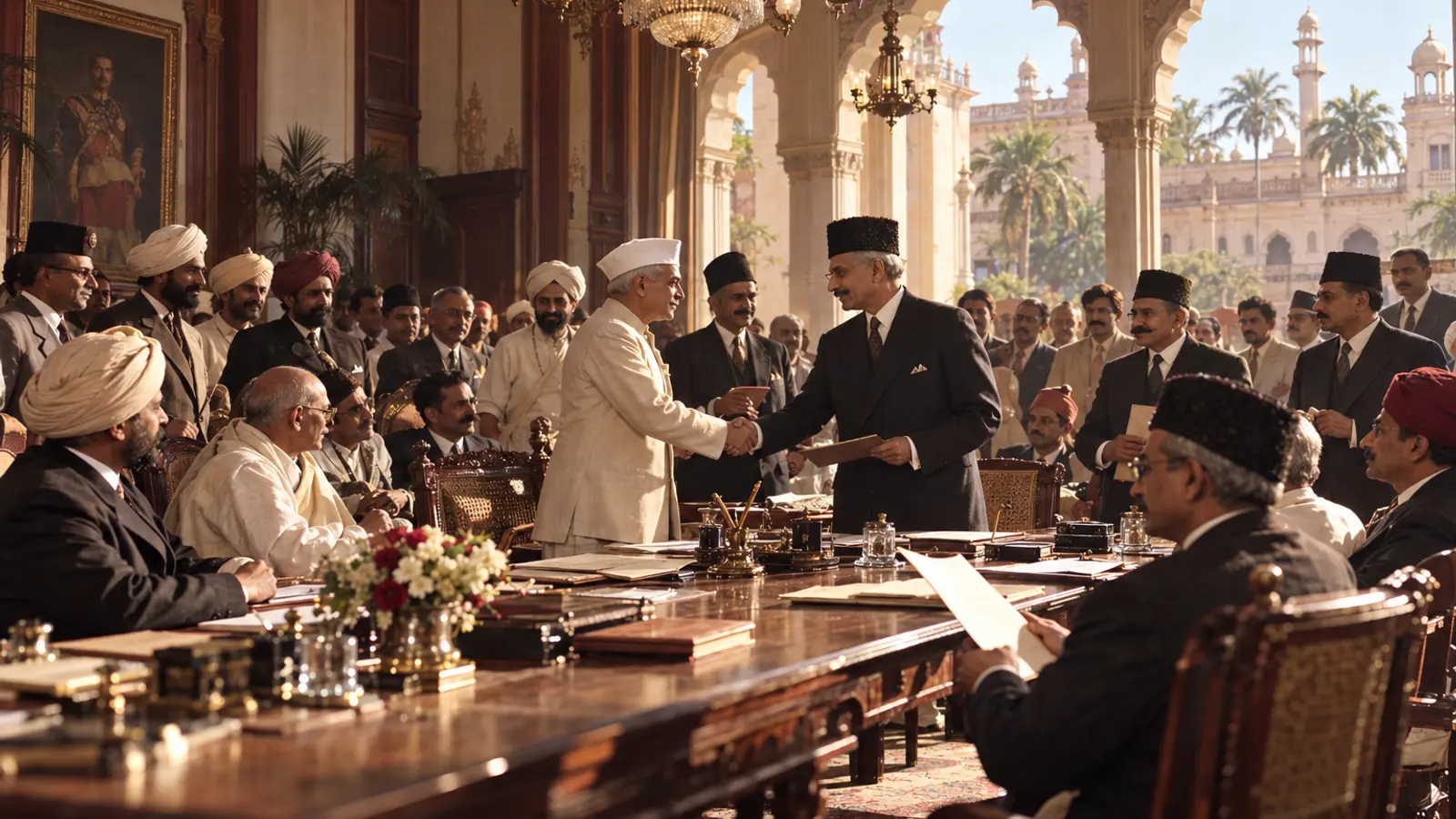
The Lucknow Pact
The war years quickened everything. Tilak was back from six years in a Mandalay prison, unbroken; he and Annie Besant, the Irish theosophist turned Indian nationalist, built Home Rule Leagues that carried the demand for self-government out of the drawing rooms and into the small towns. At Lucknow in December 1916 the Congress healed its decade-old split between Moderates and Extremists — and did something larger: it sat down with the Muslim League and agreed on a common constitution for a self-governing India.
The pact was a genuine bargain. Congress accepted separate electorates for Muslims and weightage in provinces where they were few; the League joined the demand that elected Indians control the legislatures and that self-government come without delay. The scheme went to the Raj over both signatures. Its principal architect was Muhammad Ali Jinnah — then a member of both parties, secular to the bone, whom Sarojini Naidu celebrated as the ambassador of Hindu-Muslim unity.
It was the high-water mark of the constitutional road, and the road not taken. Within four years Gandhi's mass politics would sweep past the lawyerly Jinnah, who opposed satyagraha as anarchy and drifted out of the Congress he had served for twenty years. The unity signed at Lucknow was real, and it was lost — read this plate again before the plates of 1940 and 1946, and weigh what the losing cost.