Bengal Cut in Two
Lord Curzon called it administrative convenience; Bengal called it vivisection. On 16 October 1905 the Viceroy's partition of Bengal took effect, dividing the Raj's largest and most politically restless province — and, its critics charged, deliberately splitting Hindu from Muslim, west from east, to weaken the nationalist tide.
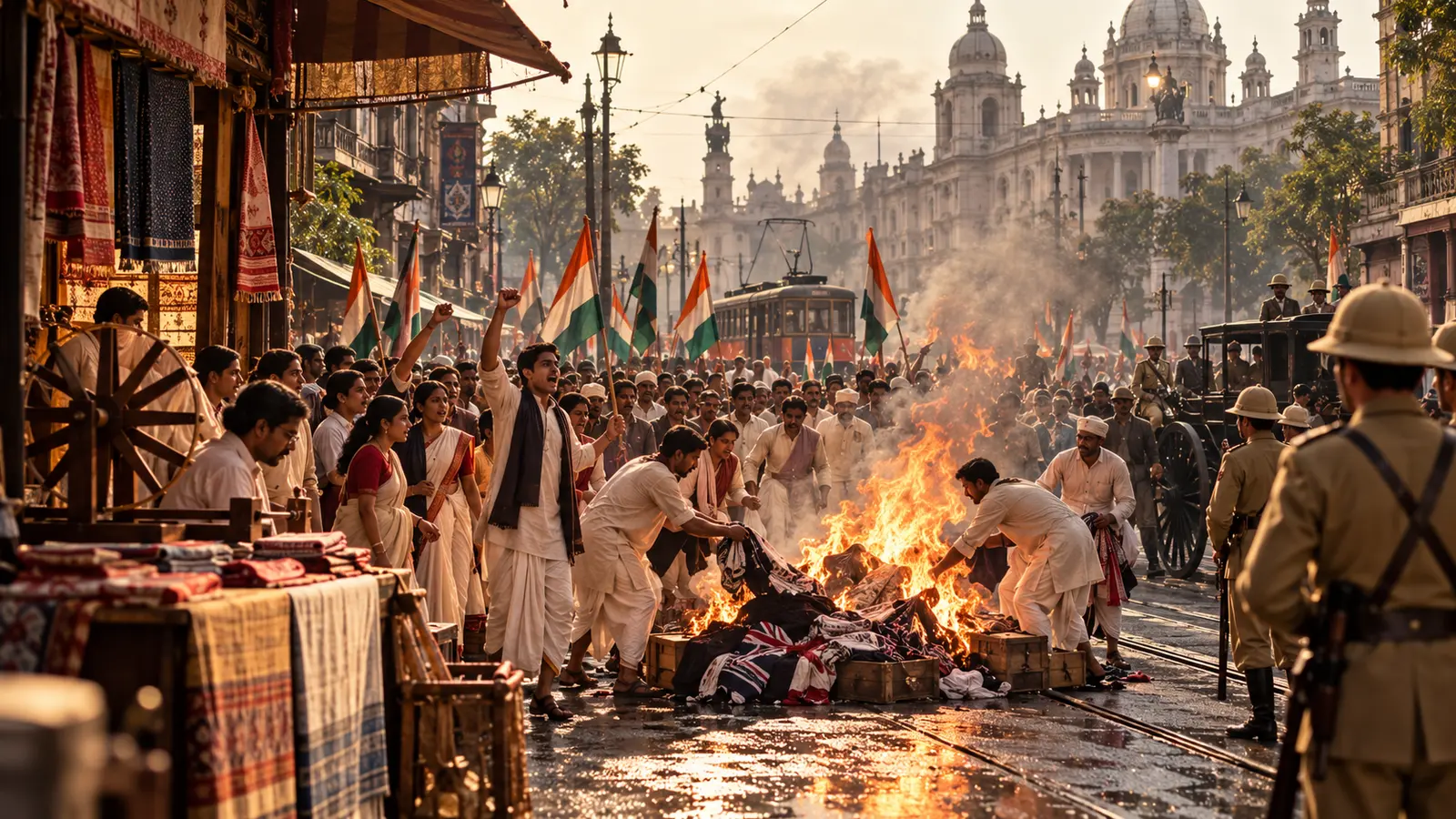
Bengal answered with mourning and with fire. On partition day, Rabindranath Tagore led processions through Calcutta in which Hindus and Muslims tied rakhis on one another's wrists as a vow of kinship. Then came Swadeshi — 'of one's own country': British cloth heaped onto bonfires, foreign sugar and salt refused, national schools and Indian mills founded, the song 'Vande Mataram' on every lip until the government tried to ban its singing.
The trio of Lal-Bal-Pal — Lajpat Rai, Tilak, Pal — carried the militancy across India, and Tilak gave the age its watchword: 'Swaraj is my birthright, and I shall have it.' The partition was annulled in 1911, but the lesson stayed learnt. The boycott had shown that ordinary people, not petitions, could make an empire flinch.