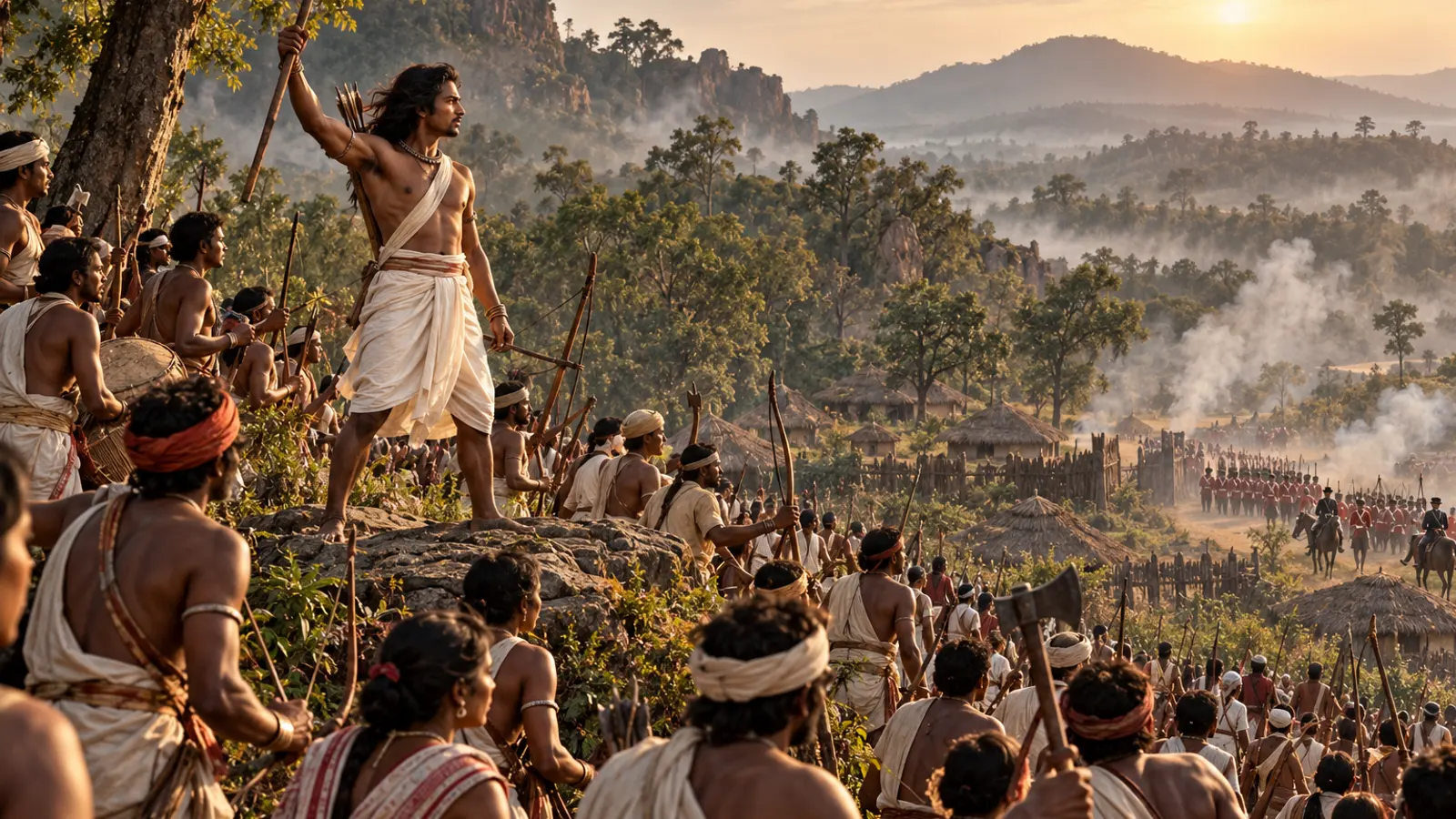
Birsa Munda's Ulgulan
For generations the Mundas of Chotanagpur had held their land by khuntkatti right — the joint title of the lineages that first cleared the forest. Under Company and Crown law that title was eaten alive by dikus, outsiders: landlords who conjured rents from paper, moneylenders, contractors pressing men into indentured labour, and forest regulations that made criminals of people gathering wood in their own hills. Into this dispossession came Birsa, a mission-schooled Munda youth turned healer and prophet, whom the villages began to call Dharti Aba — father of the earth.
Birsa's teaching fused faith and land: the dikus' rule was an offence against the earth itself, and it would end. On Christmas Eve 1899 the Ulgulan began — arrows and torches against churches, police posts, and the agents of the estates across the Munda country. In January 1900 the rising was broken on Dombari Hill, where troops fired into the assembled crowd until the hilltop, by tradition, ran with the dead — women and children among them. Birsa was betrayed for a reward, and died in Ranchi jail that June, officially of cholera. He was about twenty-five.
Then the strange victory: the Raj, shaken, passed the Chotanagpur Tenancy Act of 1908, recognising khuntkatti rights and restraining the transfer of tribal land to outsiders — the rebellion won in law what it had lost in blood. Birsa entered the songs of his people as Bhagwan, a god who had walked; a century later his portrait would hang in India's Parliament, one of the very few so honoured, and his Ulgulan stands beside the Hul in the long ledger of adivasi war against empire.