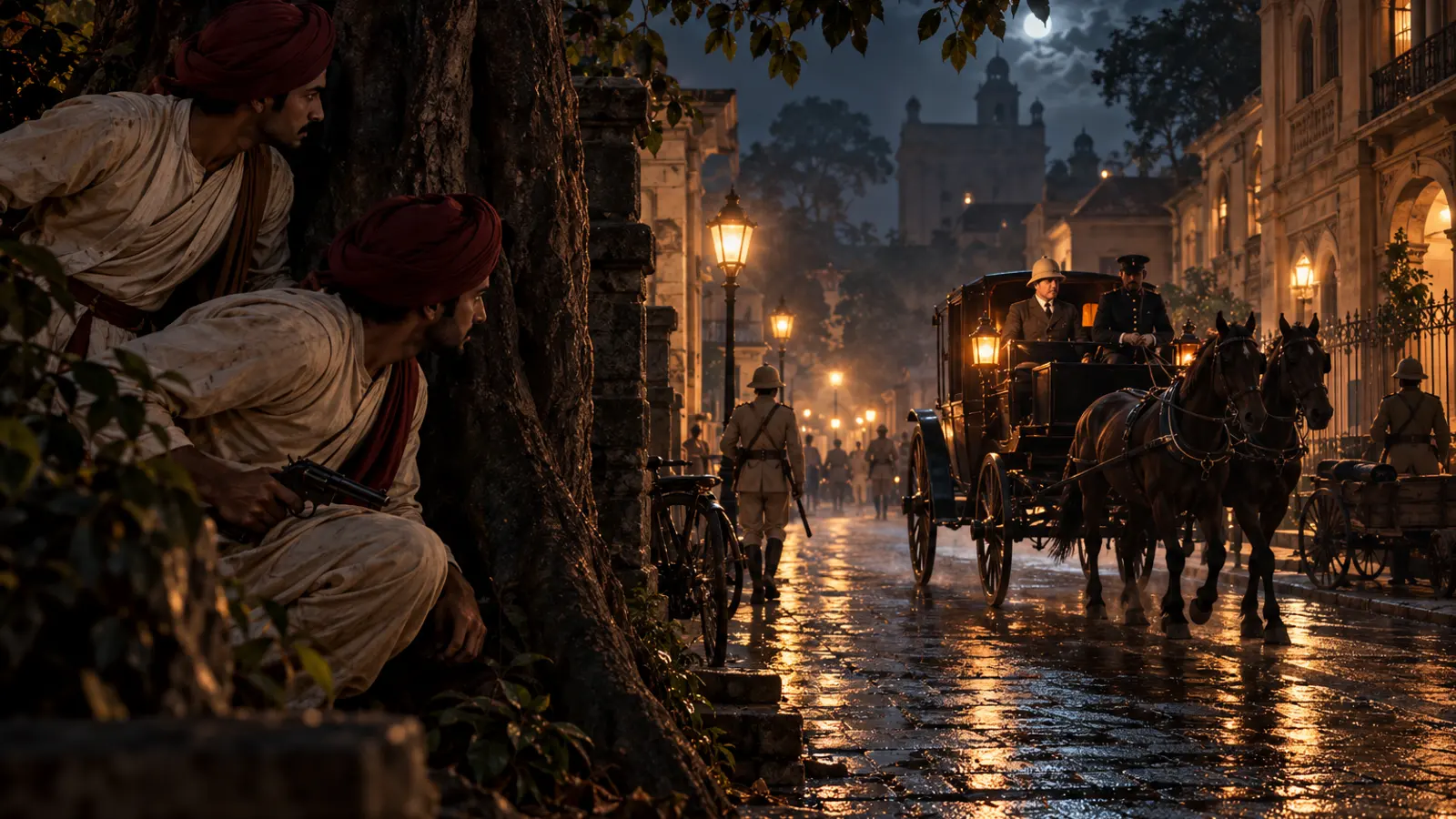
The Chapekar Brothers
Plague reached Poona in the winter of 1896–97, and the Raj's answer proved crueller than the disease. Walter Charles Rand, the plague commissioner, sent British troops through the city's lanes with powers no Indian home could refuse: doors broken open, the sick dragged to segregation camps, women searched by soldiers in the street, household shrines trampled in the hunt for the infected. Tilak's newspaper Kesari thundered that the city was being ruled 'without any regard for the feelings of the people', and Poona seethed.
Damodar and Balkrishna Chapekar, sons of a temple kirtan singer, had already concluded what the Congress moderates would not say aloud: that petitions would never move an empire. They drilled young men in a physical-culture club and waited for their moment. It came on 22 June 1897, the night Poona was lit with lamps for Queen Victoria's diamond jubilee. As Rand's carriage rolled down Ganeshkhind Road in the dark, the cry went up — 'Gondya ala re!' — and Damodar leapt onto the footboard and shot him; Balkrishna fired on Lieutenant Ayerst, riding behind. It was the first political assassination of the modern freedom struggle.
The reckoning was thorough. Betrayed by informers, Damodar went to the gallows in April 1898, the Bhagavad Gita in his hand; young Vasudeo, the third brother, shot the informers dead and was hanged in 1899 beside Balkrishna and their comrade Ranade. Tilak was jailed for sedition merely for his articles. But the shots on Ganeshkhind Road echoed for fifty years: a teenaged Vinayak Savarkar swore an oath before his family goddess on hearing of Damodar's death, and the armed line the brothers began runs on through Khudiram Bose and the Ghadar men to Bhagat Singh. From 1897 onward, the Raj faced not one struggle but two.