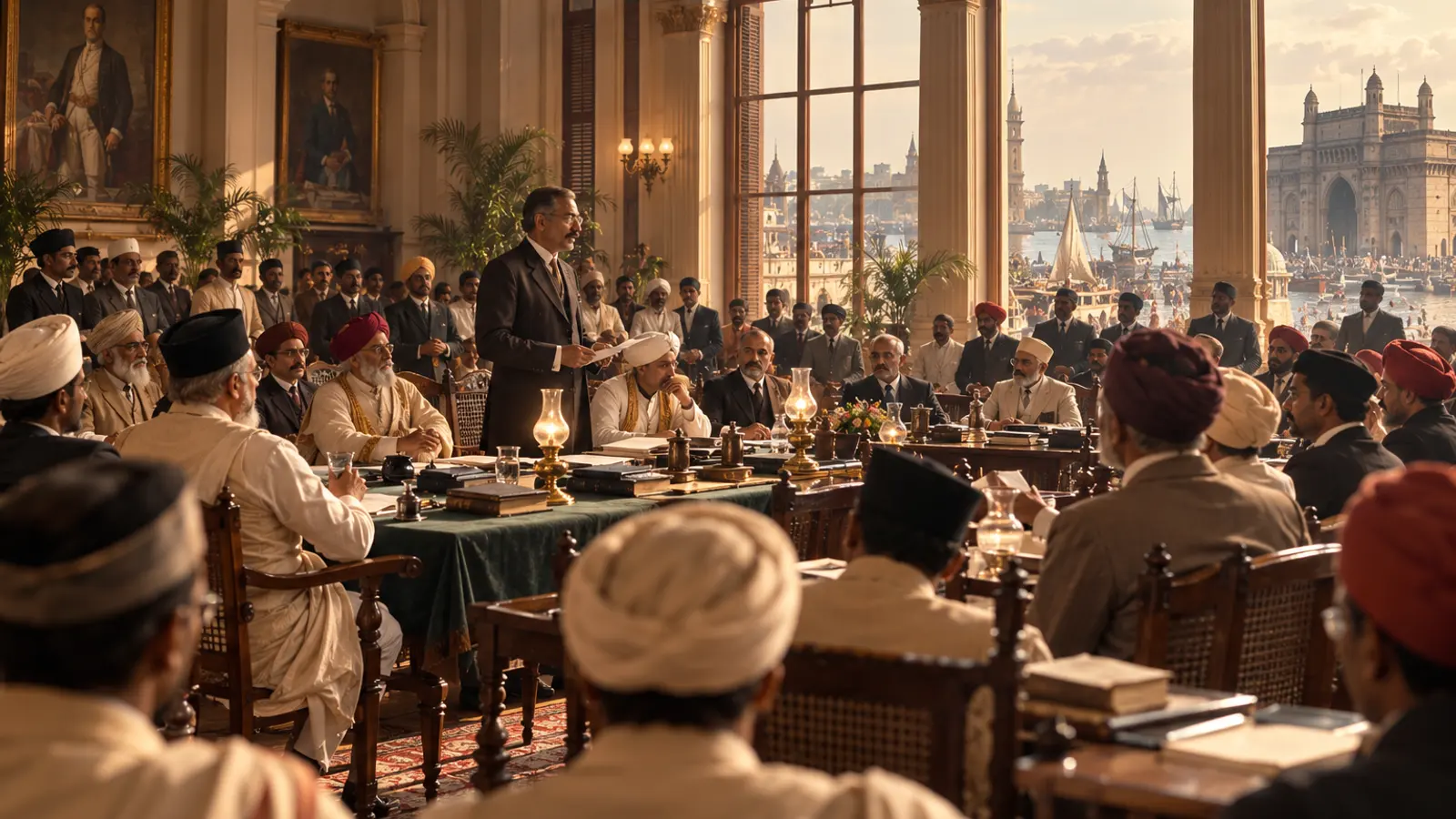
A Congress Is Born
In the last days of 1885, seventy-two lawyers, journalists, and merchants gathered in a Bombay college hall. The convener was, improbably, an Englishman: Allan Octavian Hume, a retired civil servant who believed educated Indians needed a safety valve for their grievances. Womesh Chunder Bonnerjee, a Calcutta barrister, took the chair of the first Indian National Congress.
Its early ambitions were almost painfully modest — more Indians in the civil service, scrutiny of military spending, a wider franchise for legislative councils. The delegates toasted the Queen. Yet something unprecedented had happened: men from Bombay, Bengal, and Madras, speaking different tongues and praying to different gods, had sat together and spoken as Indians.
Within the Congress's ranks the seed of a sharper argument was already growing. Dadabhai Naoroji, the 'Grand Old Man of India', was assembling his 'drain theory' — the meticulous accounting by which he showed Britain siphoning India's wealth year upon year. The petitioners' club would one day demand the whole house.