The Crown Takes India
The rebellion killed the Company. A trading firm chartered in 1600 had come to rule a subcontinent, and the events of 1857 convinced Parliament that this arrangement could not stand. By the Government of India Act of 1858, the East India Company's territories, armies, and debts passed to the British Crown. A Secretary of State for India would sit in the Cabinet; a Viceroy would rule from Calcutta.
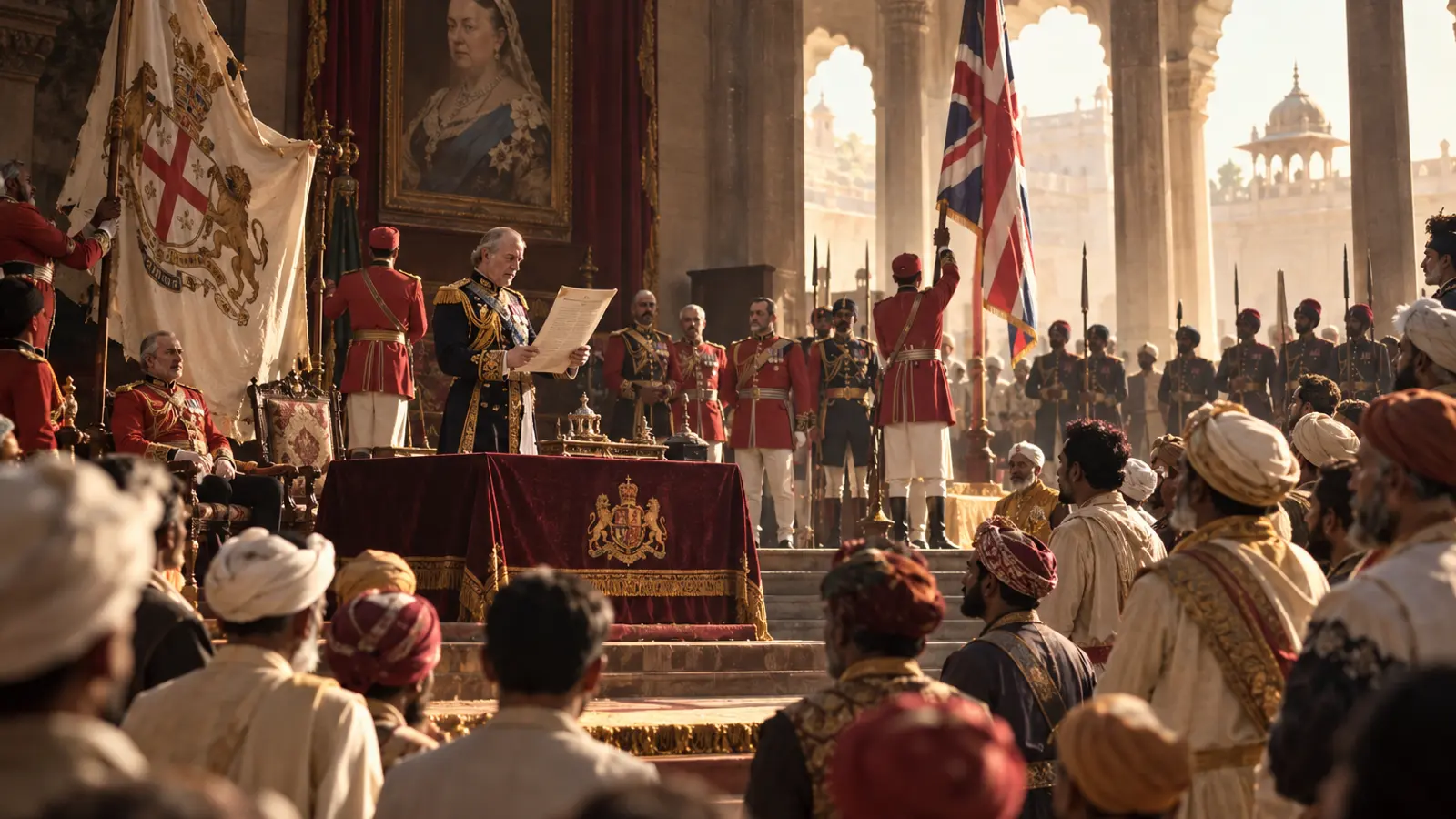
At Allahabad in November, Lord Canning read out the Queen's Proclamation. It promised religious toleration, respect for 'ancient rights, usages and customs', and admission to office regardless of race — promises Indians would spend ninety years holding the Raj to, and which nationalists later called their Magna Carta precisely because they were so rarely kept.
The machinery of the Raj now assembled itself: the Indian Civil Service, the reorganised army with its careful arithmetic of British to Indian troops, the railways and telegraphs that knit the conquest together. India was the jewel in the imperial crown — and the revenue, the soldiers, and the markets of two hundred million people were now managed from London.