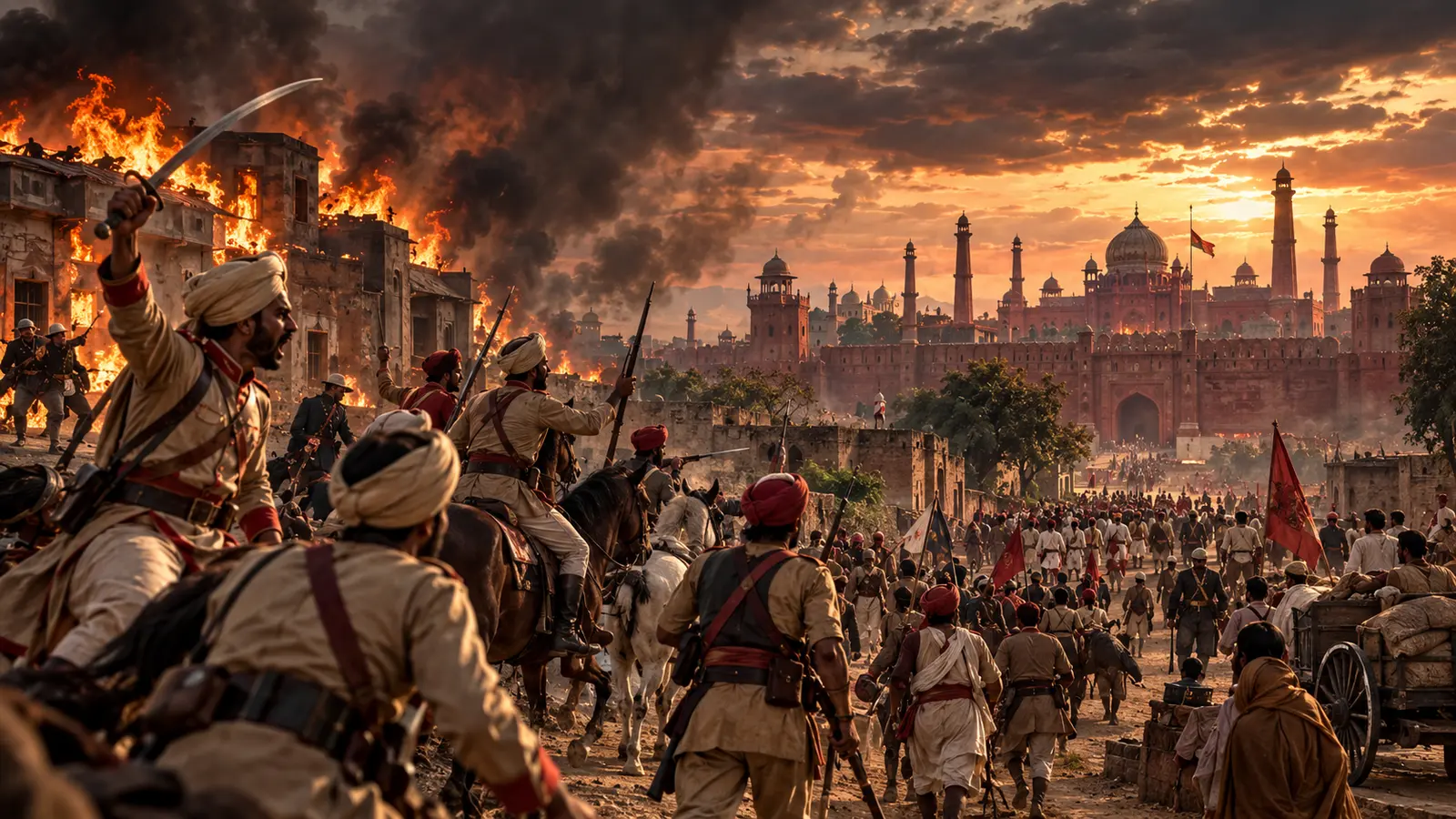
The Sepoy Rising
It began with a rumour and a cartridge. The new Enfield rifle required its paper cartridge to be bitten open, and word spread through the barracks that the grease was rendered from cow and pig fat — an offence at once to Hindu and Muslim sepoys. In March, at Barrackpore, a young soldier named Mangal Pandey fired on his officers and was hanged. On 10 May, at Meerut, eighty-five sepoys jailed for refusing the cartridge were broken out by their comrades, who killed their officers and rode through the night to Delhi.
There they proclaimed the last Mughal, the elderly poet-emperor Bahadur Shah Zafar, ruler of Hindustan. What the British called the Mutiny became something far larger: peasant revolt, dispossessed princes, and whole regiments in arms from Kanpur to Lucknow to Jhansi, where the Rani Lakshmibai rode out of her besieged fortress and died in battle at Gwalior, sword in hand.
The reconquest was merciless. Delhi was stormed and sacked in September; captured rebels were shot from cannon; Zafar was exiled to Rangoon, his sons executed. Perhaps a hundred thousand sepoys and countless civilians died. But the rising had shown that British rule rested not on consent but on force — and later generations would name it the First War of Independence.