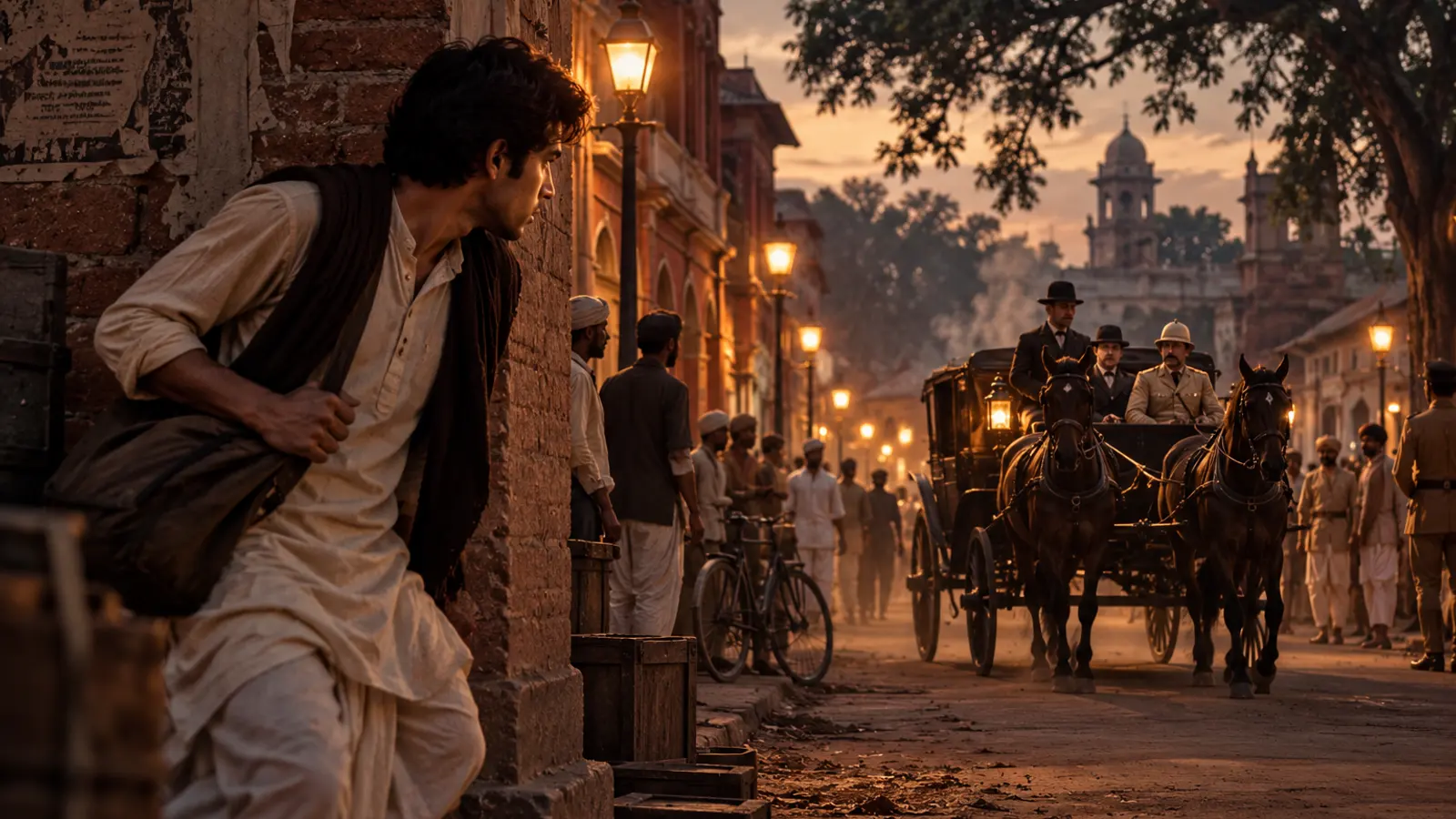
Khudiram Bose
The partition of Bengal had driven a generation underground. In Calcutta's garden houses, secret societies — the Anushilan Samiti, the Jugantar group — read the Gita beside bomb-making manuals and concluded that the Raj would answer only to force. Their first target was Douglas Kingsford, the magistrate who had ordered young Swadeshi protesters flogged, and who had been moved to quiet Muzaffarpur for his own safety. Jugantar sent two volunteers after him: Prafulla Chaki, and a village schoolboy of eighteen named Khudiram Bose.
On the night of 30 April 1908 they bombed a carriage leaving the European Club — the wrong carriage. It carried the wife and daughter of a barrister named Kennedy, and both died. Chaki, cornered at a railway station, shot himself rather than be taken. Khudiram was arrested walking the tracks at dawn, tried, and hanged on 11 August 1908. Witnesses said the boy climbed the scaffold cheerfully, and Bengal answered with a folk song of farewell that mothers sing to this day; young men took to wearing dhotis hemmed in his name.
The police swept the Calcutta gardens in the Alipore Bomb Case, netting Aurobindo Ghosh, the movement's philosopher, who was defended and acquitted by Chittaranjan Das and departed for Pondicherry a mystic. But the underground the case exposed was never truly broken: from Alipore the revolutionary line runs through the Chittagong armoury raid to the gallows of Lahore. The Chapekars had fired the first shots; Khudiram gave the armed struggle its first legend.