The Paika Rebellion
The Company took Odisha in 1803 almost without a fight, then set about losing it by administration. The paikas — Khurda's hereditary militia, who held land in return for service — were stripped of their estates as the new revenue system swept away old tenures; the salt monopoly and demands for tax in scarce silver ground the peasantry; and Bakshi Jagabandhu Bidyadhara, the kingdom's hereditary military commander, was dispossessed of his family lands by a Company amin's fraud.
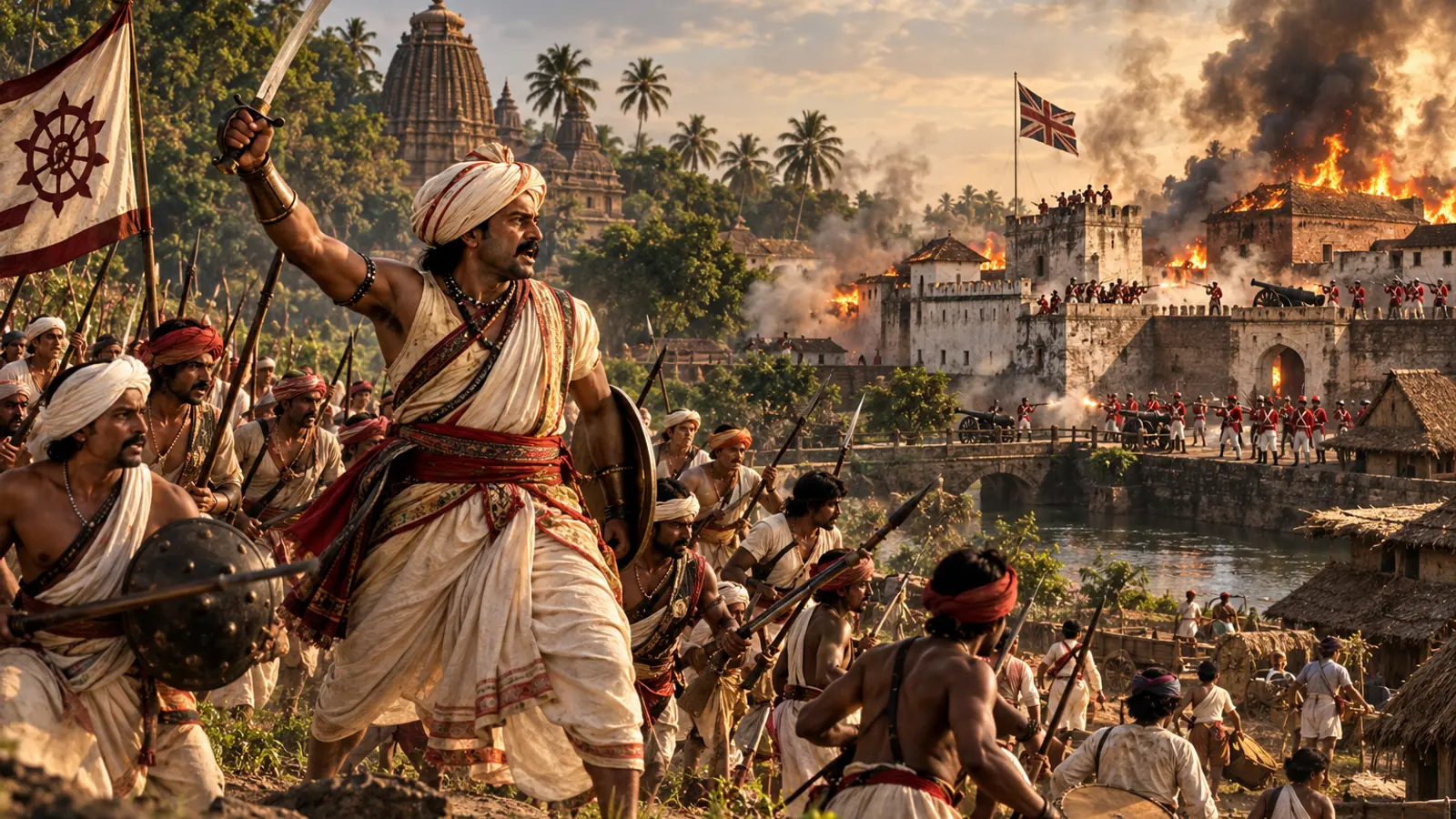
In March 1817 a column of Kondh tribesmen marched into Khurda and the paikas rose to join them, with Jagabandhu at their head. They burned police posts and revenue offices, emptied the treasury at Puri, killed Company officials, and proclaimed the boy-king Mukunda Deva restored. For a season the Company's writ ran nowhere south of Cuttack. Then the sepoy columns came, with artillery, and the rebellion scattered into the jungles of Ghumusar to fight on as guerrillas.
Martial law and burnt villages broke the rising by 1819, though Jagabandhu himself was not brought in until 1825. The Company, unusually, conceded much in victory — tenures revised, the salt price cut, new settlements made — having learned what it would relearn at intervals for a century: Odisha remembers the Paika Bidroha as its first war of independence, two full generations before the cartridges of Meerut.