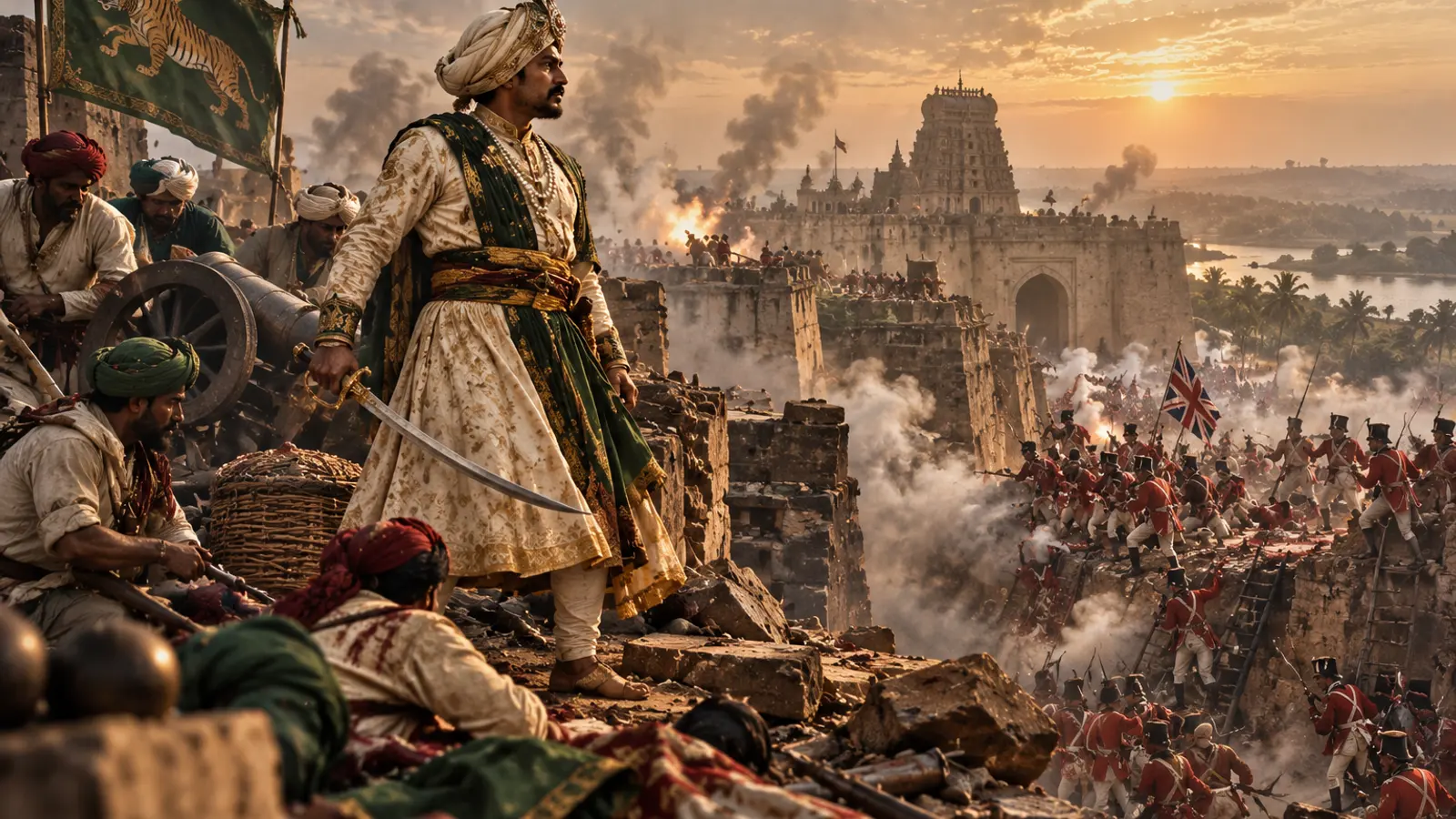
The Tiger of Mysore
For thirty years the one power in India that could meet the Company gun for gun was Mysore. Hyder Ali and his son Tipu Sultan fought it through four wars, twice dictating terms; Tipu built a rocket corps that terrified British infantry, a modern dockyard and arsenal, and sent embassies to Paris and Istanbul seeking allies against the English. He is remembered for the boast that a single day lived as a tiger was worth more than years lived as a sheep — and he governed, and fought, accordingly.
In 1799 Governor-General Richard Wellesley, allied with the Nizam and the Marathas, closed on Srirangapatna with overwhelming force. On 4 May the breach was stormed in the afternoon heat. Tipu, urged to flee by his officers, refused, and was found in the evening beneath a heap of the dead at the Water Gate, sword still in his hand. The Company took his treasury, his library, and his kingdom, and set a child of the old dynasty on a leashed throne.
With Mysore broken, no Indian state could again match the Company in the field; within twenty years it was master of the subcontinent. But the tiger left claw-marks: his rockets were carried to Woolwich and copied for Britain's own wars, his memory lived in ballads on both sides, and a century later the nationalists reclaimed him — the first sovereign to die in battle rather than accept the Company's peace.