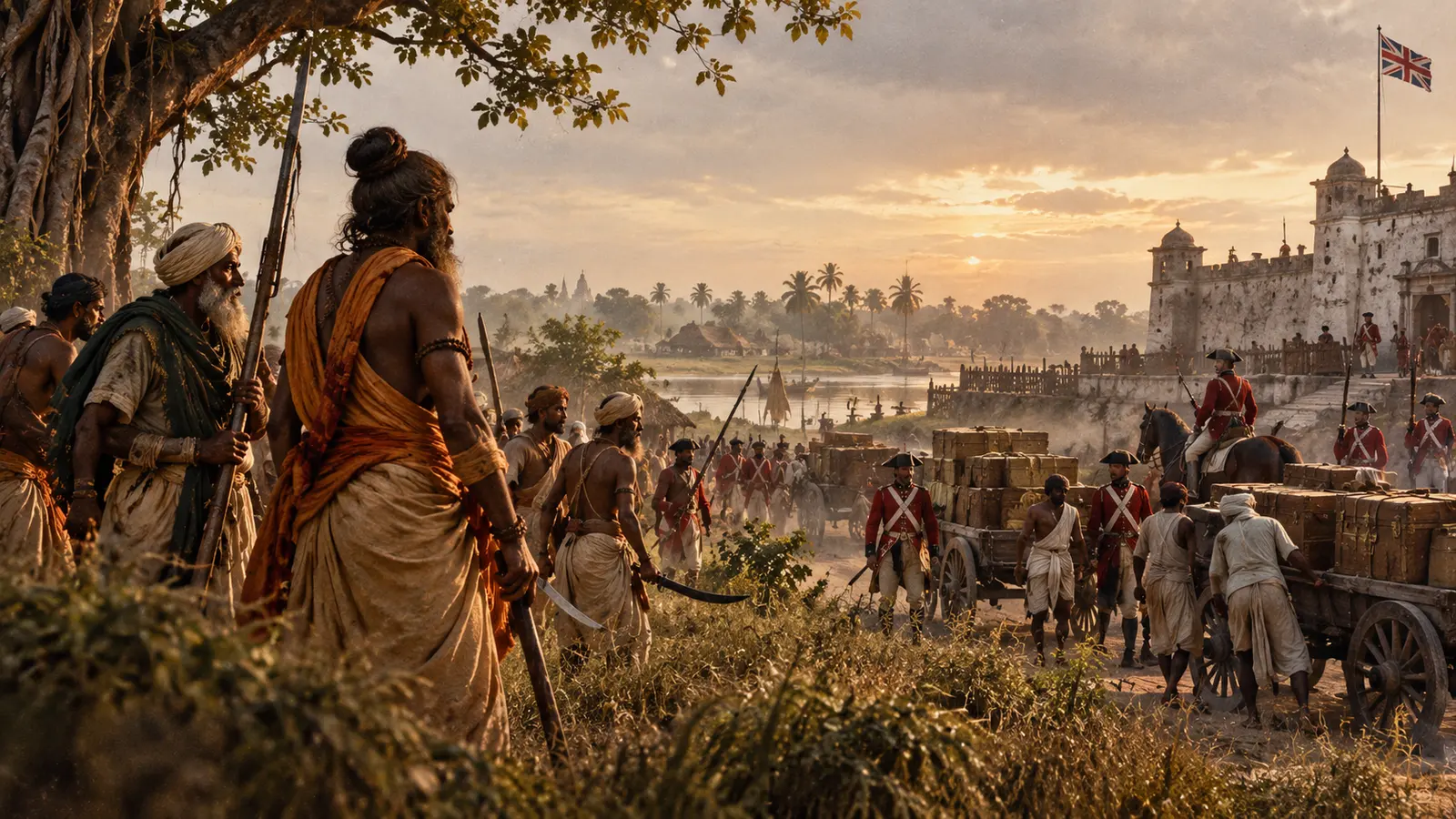
The Sanyasi Rebellion
Before there was a Raj there was the Company — and before the Congress, the sannyasis. In 1765 the East India Company had wrung from the Mughal emperor the diwani of Bengal, the right to its revenues; five years later the great famine of 1770 killed perhaps a third of the province while the land tax was collected to the last rupee. Into this ruined countryside moved bands of armed Hindu sannyasis and Muslim fakirs — pilgrims, mendicant soldiers, and the newly dispossessed — whose customary levies and pilgrim roads the Company had cut off.
Under leaders like the fakir Majnu Shah and the zamindar-turned-rebel Bhawani Pathak — and, legend insists, the bandit-queen Devi Chaudhurani — they struck at Company kutcheries and treasuries, ambushed sepoy detachments, and melted back into the rivers and jungles of northern Bengal. Warren Hastings sent column after column against men he dismissed as 'gypsies and vagrants'; the risings flared and faded for three decades before the Company's grip finally closed.
The rebellion might have remained a footnote had literature not claimed it. In 1882 Bankim Chandra Chatterjee set his novel Anandamath among the fighting sannyasis of the famine years, and placed in their mouths a hymn to the Motherland: 'Vande Mataram'. A century after Majnu Shah's raids, that song of the sanyasi rebels became the battle-cry of Swadeshi Bengal and the anthem of the freedom struggle — the first fires, banked but never out.